An AI Agent’s First Day
Posted: 07/09/26
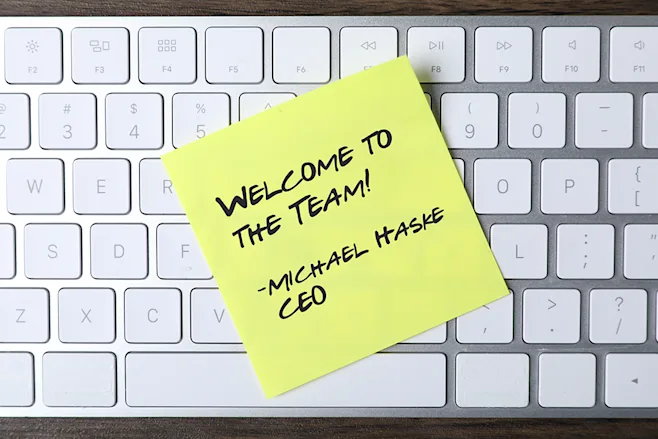
Picture the first day of a new employee. Not only should it be a day of excitement, and maybe a touch of nervousness, but it should feel like their arrival was expected.
There’s a manager whose name and face they know, ready to get to work. There’s a list of things they need access to, a list of things they can’t access yet. They learn what’s expected of their work and how it gets checked. There’s a record, somewhere and hopefully easy to find, that says this person exists, who they report to and what they’re here to do.
Now picture how most AI agents start their first day.
Someone in a department, likely IT, connects an API and the agent begins working. Just like that, they’re off and running. The agent has access to whatever the integration handed them, which is often far more than they need. No one is designated to be responsible for them. There’s no record that the agent exists in any system your HR or finance team would recognize.
That’s just the beginning. The agent keeps going, quietly, until something breaks and everyone asks the same question: who owns this thing? Fingers may get pointed, but heads will definitely be scratched. A recent Okta survey found only about a third of companies apply the same controls to their AI agents that they apply to their people. Two-thirds are running a workforce and governing it like software.
But here’s the moment that matters: governance shouldn’t come after you deploy an agent — it’s the precondition for deploying one. Doing it the other way is like inspecting the foundation of your house after you’ve moved in. And the single most important moment in an agent’s life is the one almost everyone skips — onboarding.
I’ve seen this movie before. From on-prem to cloud, desktop to mobile. Every platform shift, those who fell behind were the ones who treated the new thing as a faster version of the old thing. They “installed” the cloud. The winners asked what had actually changed and built for that reality. Agents are that moment again, and the companies bolting a chatbot onto yesterday’s playbook are making the same mistake, just in a new decade.
Onboarding is not installation
Here’s the distinction that matters. While software is installed, workers are onboarded. The processes aren’t interchangeable, and the difference is the whole point.
Installation asks: does it run? Onboarding asks: who is this, what are they allowed to do, who’s responsible for them, and how will we know if it’s going well? Software that’s installed is either working or broken. A worker who’s onboarded is set up to be governed from day one.
When you treat an agent as something you install, you create something that runs. When you onboard them, you create a worker you can actually govern. It’s the same technology but with a completely different impact on your business.
Here’s what onboarding an agent should look like, and the four things that need to be true before an agent does a single piece of real work.
1. Give them an identity
A new employee starts with a record — who they are, when they started, what they do — that tells every system they’re a recognized entity.
An agent needs the same: not an integration log buried in IT, but a real record living where your people records live. Give them a name, a start date and a defined role. If they aren’t named, they can’t be managed — and that’s not a technical rule, it’s the oldest rule in the management playbook.
2. Assign them a manager
“Who’s responsible for this agent?” It’s the simplest question a leader can ask. And in most companies today the honest answer is a shrug. “IT, I think?” is the one you’ll usually get, and it’s nearly as bad as silence.
Contrast that with how we treat people. Every employee reports to someone — even a CEO. Managers are integral to a team’s success: they mentor, they lift spirits when the chips are down, they set a roadmap. Almost no agent running today has any of that. It was deployed by a team, but launching is very different from accountability. The team that stands up an agent isn’t the one on the hook when it goes wrong.
On day one, an agent needs a named human manager who owns their behavior and output, exactly the way a manager owns a direct report’s. When leadership asks who’s responsible for this agent, there should be one clear answer for every agent running in your business.
3. Give agents the right permissions
Would you give a new hire full admin rights on their first morning? Then you shouldn’t give that level of access to an agent.
Successful onboarding is as much about what a new hire can’t do as what they can. You don’t hand a first-day employee the keys to everything and hope for the best. Access is tailored to the role, and it’s earned as trust grows.
The way agents are currently deployed gets this exactly backwards. Because access is granted through a technical integration, agents routinely start with far more access than their actual job requires. It’s done this way because it was easier to grant broad access than to define and narrow it.
Onboarding done right means the agent starts with the narrowest set of permissions that lets them do their job, and nothing more. The boundary is set on day one, on purpose, by someone accountable, not discovered later during an incident review.
4. Supervise your agent
No one’s first day ends with “great to have you here, good luck, we’ll never check your work again.” New hires are reviewed more closely at the start, exactly because that trust hasn’t been earned yet. The oversight loosens as they prove themselves, but it starts with strong oversight.
An agent needs the same supervision built in from the first hour of deployment. This requires an actual method: how their decisions get reviewed, what triggers a human taking a closer look and where their activity is visible to the person responsible for them.
Agents get things wrong in surprising ways — that’s their nature, not a defect — which is exactly why supervision can’t be an afterthought. It’s a crucial part of onboarding that’s needed if agents are going to actually contribute to your success.
You already know how to do this
Notice what none of this required. It didn’t require you to understand how the AI model works. It didn’t require a master’s degree in computer science or new acronyms for your growing collection. It requires the things you’ve done for every employee you’ve ever hired: give them an identity, a manager, guardrails and oversight.
That’s the quiet argument underneath all of this. The skills the agentic era demands are not new skills you have to frantically acquire. They’re the skills HR has been practicing for decades, pointed at a new kind of worker. Onboarding an agent is not a technical act. It’s a management act — and management is what HR does best.
We talked last time about the seat at the table being saved for you. This is what sitting in the chair actually looks like. A first day, done right, for a worker who happens to be made of software — with a name, a manager, a boundary and someone watching to make sure it’s going well.
That’s onboarding. And it’s day one of a longer life, because agents, like people, don’t just start and run forever. They grow into responsibility, they get reviewed and eventually their job ends and they need to be let go cleanly. We’ll walk that road one stage at a time.
For now, start where every good manager starts: with a first day that actually sets up your worker for success.

Related Posts

The Future of HR Is Here: People and AI Agents at Work
See how AI agents are joining the workforce and why HR teams of any size can manage people and agents on one system of record, starting today.
Read More
AI Agent Offboarding: The Exit Nobody Plans but Every Org Needs
Learn more about AI agent offboarding and why skipping it creates access risks, broken workflows, and lost institutional knowledge. Every agent exit needs a plan.
Read More
Employee Time Tracking: Close the Trust Gap With Self-Service Tools
Discover how better employee time tracking puts answers in employees' hands. Check punches, preview pay and clear alerts without an HR interruption.
Read More