What Our 2026 HR Leaders Report Tells Me About the Work Ahead
Posted: 10/15/26
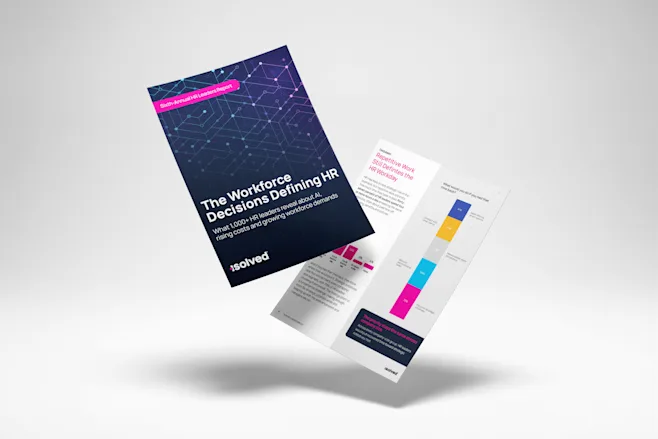
Every year, our HR Leaders Report provides me with a direct read on where the HR function really stands in the US. This year, more than 1,000 HR leaders told us something I’ve believed for a while: HR has fully arrived. Ninety-nine percent say their teams are seen as strategic. Eighty-two percent are using AI in HR, up from 69% a year ago. We spent years fighting for the seat at the high table, and the data says that we’re in that chair to stay.
But the number that stopped me in my tracks was concerning: only half of HR leaders say that AI has freed their teams to focus on more strategic work. Almost everyone is adopting AI, but only half are getting time back to do the real work of HR. That gap is telling. Adoption is important, but on its own it tells you almost nothing. I can tell you how many people on my team used an AI tool last week. But I can’t immediately tell you from that number whether a single process got better.
Here’s what I’m taking from the HR Leaders Report, and what I plan to do differently.
Stop Measuring Usage, Start Measuring Outcomes
Eighty percent of workforces have been trained on AI, and 76% of leaders believe it improves efficiency. Those numbers measure effort. What I care about is what has changed.
Inside isolved, we use AI across job descriptions, onboarding, performance and learning recommendations. The turning point came the day we stopped asking “how is AI being used here?” and started asking “how is AI making this work better?” Same tools, completely different question and results.
When I evaluate technology this year, I’m not asking a vendor how many features have AI stamped on them. I’m asking what that AI produces: fewer HR interventions, faster answers to the repetitive questions that eat four or more hours a day for nearly half of us, and hours that come back to the team. Sixty-four percent of leaders are weighing a switch in their HCM technology, with stronger AI the top reason. I understand the instinct, but I’d caution my peers: don’t move toward AI that only flags the problem and leaves more work on your desk. An alert about a payroll error helps only if the error gets fixed before payroll closes. That’s the bar I’m holding vendors to.
And there’s a second half to the question: what did we do with the time we got back? Time saved only matters if it lands somewhere human: a manager who finally has room for a career conversation, an employee who gets help when they need it.
The Talent “Crisis” Is Mostly a Definitions Problem
Fifty-one percent of leaders say their industry is in a talent crisis, and 67% of them point to a shortage of skilled workers. This is where I part ways with a lot of my peers. I don’t think most of us have a shortage. I think we have an understanding problem. We haven’t stopped to redefine what “great” looks like now that AI has changed the work itself, and this report shows it has. Skill gaps created by AI now tie as the top threat to talent acquisition, and 59% of leaders say their own workforce already has a skills gap, up from 48% last year.
Now, I get specific. Before I open another role or buy another tool, I want an honest definition of what each role needs now: the skills AI just made essential, and the ones it made optional. Specifically name the current gap and you often find you can build it rather than buy it. This is what the leaders in this report are doing: closing gaps with training ahead of hiring. The “crisis” shrinks the moment you can say exactly what you’re looking for.
The Real Shift: Managing a Workforce That Isn’t All Human
AI’s impact on the workforce is the number one organizational concern in this report, and its impact on our own jobs is the top personal concern I think we’re underestimating the actual shift. AI agents are starting work alongside employees, and almost no one is ready for the question that’s raised: who is accountable for what those agents do, and how do we measure their performance?
The answer to that question has HR’s name all over it. We are the function that already knows how to bring a new worker on, set expectations, hold people to a standard and move them along when it isn’t working. AI agents need the same discipline. Skip it, and you get the worst version of this: employees babysitting agents nobody owns, and completing tasks nobody tracks.
I’m treating agents as part of the workforce, with the same questions I’d ask about any new hire. What is this one responsible for? Who owns its performance? Where does a human have to stay in the loop? The person is still the final approver of the work, and still carries the accountability for it.
Integrating AI into how HR works and makes decisions is already the biggest change leaders say they’ve seen in their departments this past year. That’s change management, whether a company calls it that or not. Leading people through something no one has done before, building the track while the train is already moving, is the actual work. It’s full of opportunity, and it belongs to us.
HR’s Moment to Lead
This year’s report comes back to one thing: HR’s influence is growing faster than its capacity. AI can close that gap, but only if we measure the right thing, define the work clearly and manage the new workforce, human and agent alike, with the discipline we already have.
HR has asked for this moment for a long time, the opportunity to be involved in big picture decisions, to have our influence felt throughout the workforce, to make a difference for our people. The report tells me that moment is here. The only way to lose it is to hand it back: to treat AI as someone else’s project, or to settle for usage numbers that look good on a slide and change nothing on the floor. I don’t plan to do either, and I don’t think you should have to.
isolved’s 2026 HR Leaders Report, The Workforce Decisions Defining HR, draws on responses from more than 1,000 HR leaders. Read the full report today.

Related Posts

Org Chart: An Underrated Asset in Your AI Strategy
Learn why your org chart is the key to smarter AI deployment. Structural visibility reveals bottlenecks, maps repetitive work and guides workforce planning before you invest.
Read More
AI for HR Professionals: Practical Applications and Benefits
Learn how AI for HR professionals can cut busywork without a complex strategy. Practical starting points for small and midsize HR teams ready to work smarter.
Read More
AI Agents for HR: Hire Them Like You Would Anyone Else
Learn why AI agents for HR deserve the same hiring rigor as human employees. See how to define roles, evaluate fit and build accountability before deploying your next agent.
Read More