Is Your Hiring Process Helping or Slowing You Down?
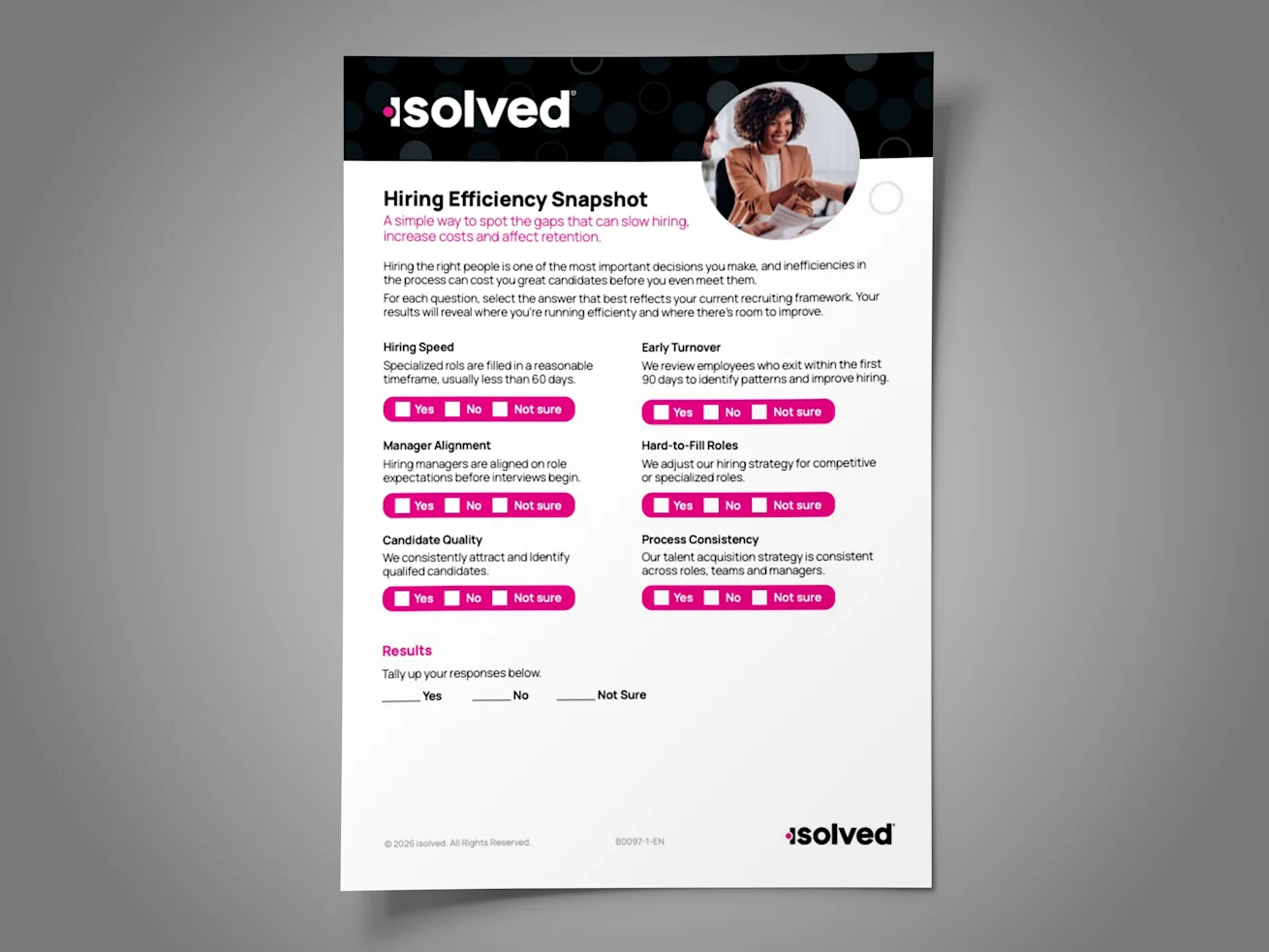
Open roles, inconsistent candidate quality and early turnover can feel unpredictable, but they often point to gaps in the hiring process. A recruitment process can look fine on paper while quietly costing you time, money and talent through bottlenecks, inconsistency and missed hires. Improving hiring process efficiency starts with knowing where those gaps are.
Whether your team uses applicant tracking systems or still coordinates hiring through email and spreadsheets, you can answer six quick questions to see your hiring efficiency snapshot and where your talent acquisition efforts could improve.
What the Snapshot Covers
Hiring speed, including whether time-to-fill falls within a reasonable timeframe
Alignment between hiring managers and HR, including whether expectations and job descriptions are clear before the interview process begins
Candidate quality, including how many applicants are qualified for the role they applied to and what that means for quality of hire
Early turnover, including how feedback is tracked when employees exit early and what it means for retention rates
Hard-to-fill roles, including whether your recruitment strategy and sourcing adapt when roles become difficult to fill
Process consistency, including whether hiring steps are structured or dependent on a team or manager
Download the snapshot to see where your hiring process efficiency stands.
Please download your Infographic.
Download InfographicRelated Content

Labor Cost Management: Find Where Your Budget Is Leaking
Discover labor cost management gaps hiding in overtime, staffing levels, and manual timesheets. See what it takes to start controlling costs before margins shrink.
Read More
401k Administration Challenges That Drive Cost and Liability
Download this infographic on 401k administration challenges to see where manual work and risk build up. Missed contributions, compliance testing, and fiduciary liability explained.
Read More
Training Effectiveness: Turn Course Completion Into Real Performance
Learn more about training effectiveness and why completion rates alone don't prove impact. Evaluation methods, learning analytics, and business outcomes explained.
Read More