Flexible Benefit Plans
Take the Complexity out of Flexible Benefits Administration
Leave the hassle to the experts -- isolved is your trusted partner for a diverse benefits package that goes above and beyond for your employees, helping you attract and retain a top talent, while minimizing tax liabilities.


What are flexible benefit accounts?
FSAs are designed to lower tax liabilities, enhance employee well-being, and boost productivity. isolved delivers high-touch account-based administration that streamlines reimbursements and transforms the employee experience trhough:
Anytime, anywhere access to plan information and support
Seamless reimbursements for out-of-pocket expenses
Point-of-sale access to benefit accounts with employer debit cards
Employer visibility and reporting capabilities that lowers risk
Expert guidance to build and scale plans that meet your evolving workforce needs
Maximize Your Perks: Flexible Benefit Accounts Options
Flexible Spending Accounts
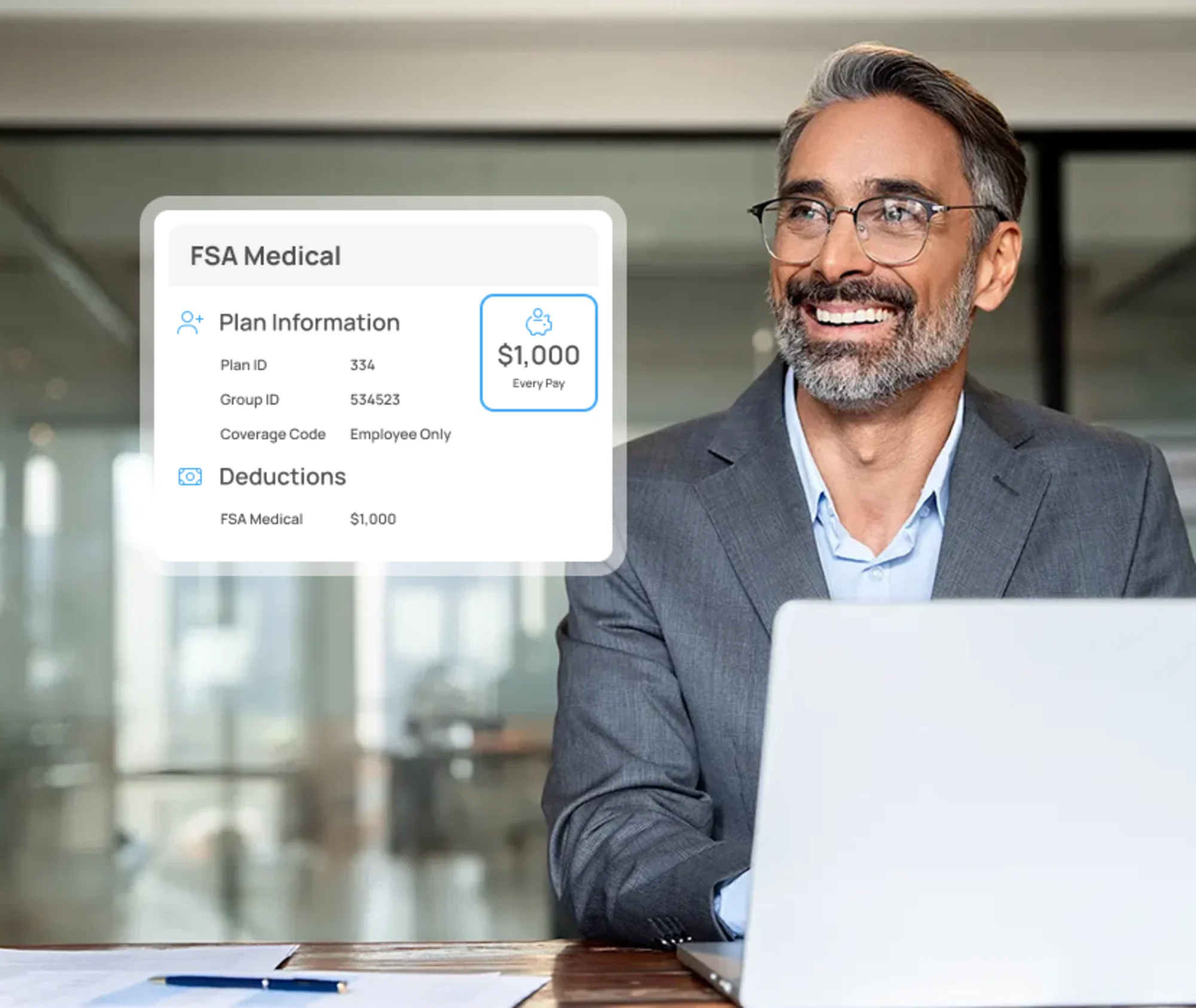
A flexible spending account (FSA) allows employees to deduct pre-tax dollars to contribute toward qualified wellness expenses, like out-of-pocket medical and dependent care. Employers enjoy savings on payroll taxes, while providing participants with autonomy over their healthcare expenses.
Health Reimbursement Arrangements
A health reimbursement arrangement (HRA) streamlines tax-deductible employer reimbursement on participants' eligible, out-of-pocket medical expenses. By offering an HRA, employers have the ability to limit risk with a maximum reimbursement amount, as well as retain HRA dollars that go unused by employees.

Health Savings Accounts
A health savings account (HSA) is a tax-advantaged savings account paired with a high-deductible health plan (HDHP) that offers your employees a simple way to manage qualified healthcare costs.
For employers, HSAs will add flexibility to your health and retirement benefits, as well as reduce FICA and FUTA payroll taxes. Offering an HSA with an HDHP can also lower health insurance premiums, saving your business money while supporting employees’ financial well-being.

Transit & Parking Benefits
The daily commute can put a real strain on employees. Whether they're paying for parking or covering the cost of a transit pass, expenses can add up fast. A transit and parking plan helps by letting them set aside pre-tax funds to pay for qualified transportation costs.
Transit plans are easy to set up and use, and participants receive a debit card to pay directly for eligible, instead of having to wait for reimbursement.

Lifestyle Spending Accounts
A lifestyle spending account (LSA) is an employer-funded benefit account that allows employees to use pre-tax dollars for everyday wellness expenses, like fitness memberships or mental health resources, that may not be covered by traditional healthcare. LSAs contribute to a progressive benefits strategy, supporting participants' well-being and boosting engagement.

Flexible Benefit Plans FAQs
Get quick answers to common questions about flexible benefits plans—from how they work to what HR teams need to consider. Built for HR leaders exploring ways to align benefits with employee needs and organizational goals.
isolved Benefit Services
Managing benefits can be complex and time-consuming. Let isolved help you stay compliant while giving employees the benefits they want and need.